Seven Years at Xuanwu, A New Journey Ahead
Today is the most important day of my career so far.
I am leaving Tencent's Xuanwu Lab, which I joined immediately after graduation and where I have worked for seven years. I will soon join MiniMax and begin a new journey. As I prepare to say goodbye, I am filled with emotion: reluctance and gratitude, but also anticipation for what lies ahead.
At this important turning point in my life, I want to record the ideas that have guided me through these years and continue to shape my aspirations. Looking back, both my seven years at Xuanwu and my decision to set out again today have been centered on them.
I. A Gentleman Is Not a Vessel: Hold to the Center and Respond to the Infinite
My first aspiration is to be "not a vessel."
Confucius said, "A gentleman is not a vessel." A vessel has a use, but also a limit. Once shaped into a particular vessel, it is often confined to a single purpose. To be "not a vessel" does not mean having no expertise, nor does it mean merely dabbling. It means refusing to be limited by one skill or confined to one profession: being able to go deep into a particular area while still seeing the whole; holding firm to one's principles while adapting to changing circumstances. Hold to the center of the ring, and respond to the infinite.
Rather than becoming an exquisitely crafted vessel with a predetermined purpose, I hope to keep expanding my boundaries: to develop the ability to understand different problems, enter different fields, and accomplish different kinds of work—ultimately becoming someone capable of doing what I truly want to do.
Throughout my life, I have sought to understand a broader world. I have read the classics of Confucianism, Buddhism, and Daoism, while also exploring Western philosophy and literature from China and abroad. I try to experience different things whenever possible. They may not immediately translate into a measurable capability, but they continually help me understand the world, understand others, and reflect on myself.
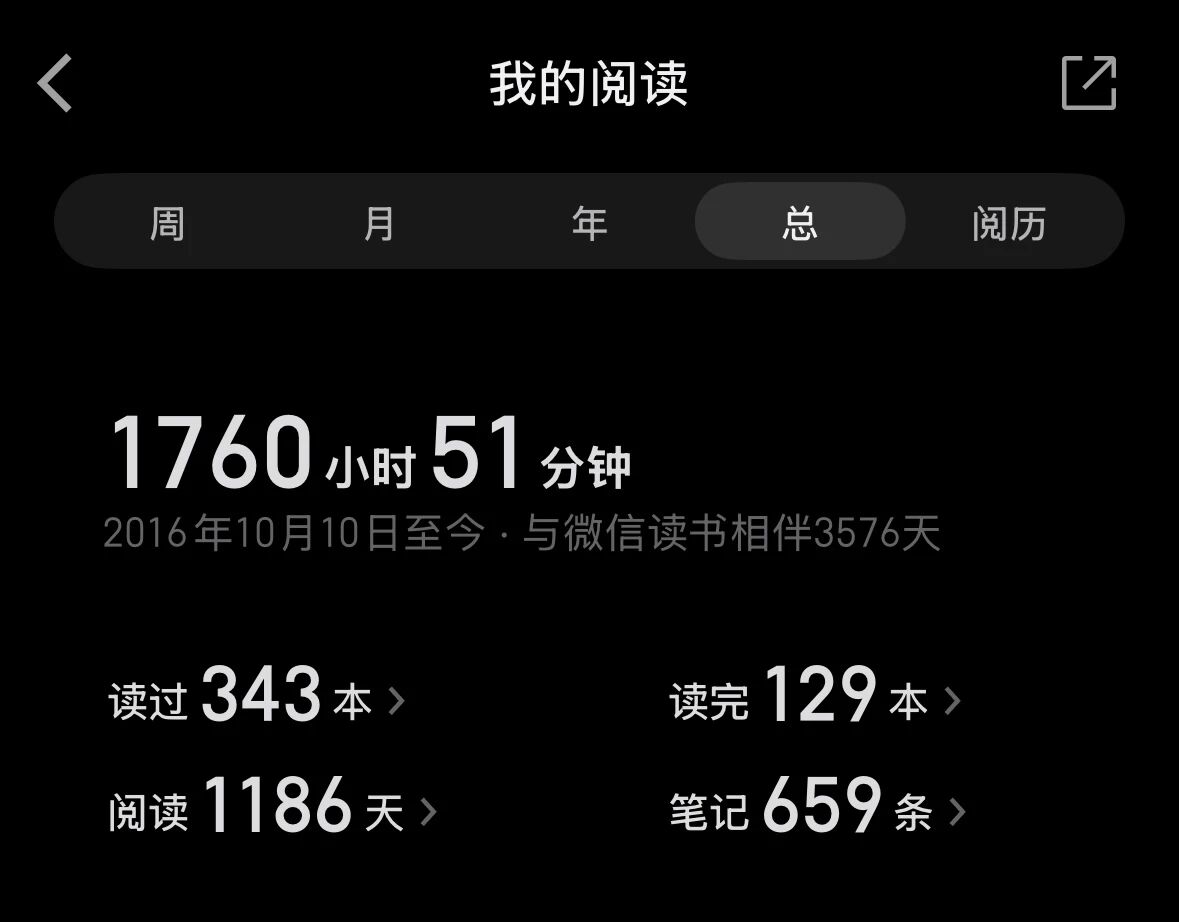
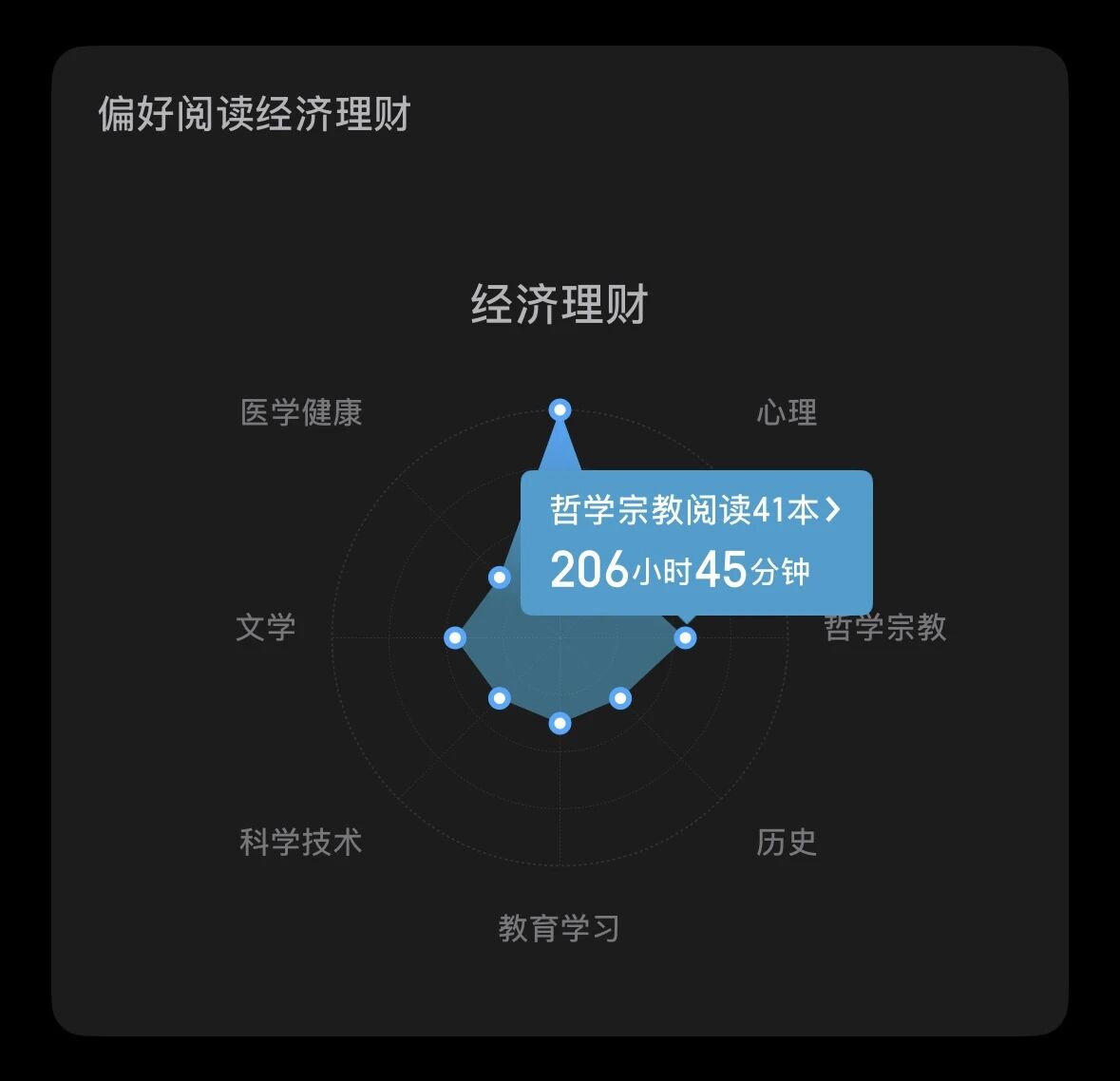
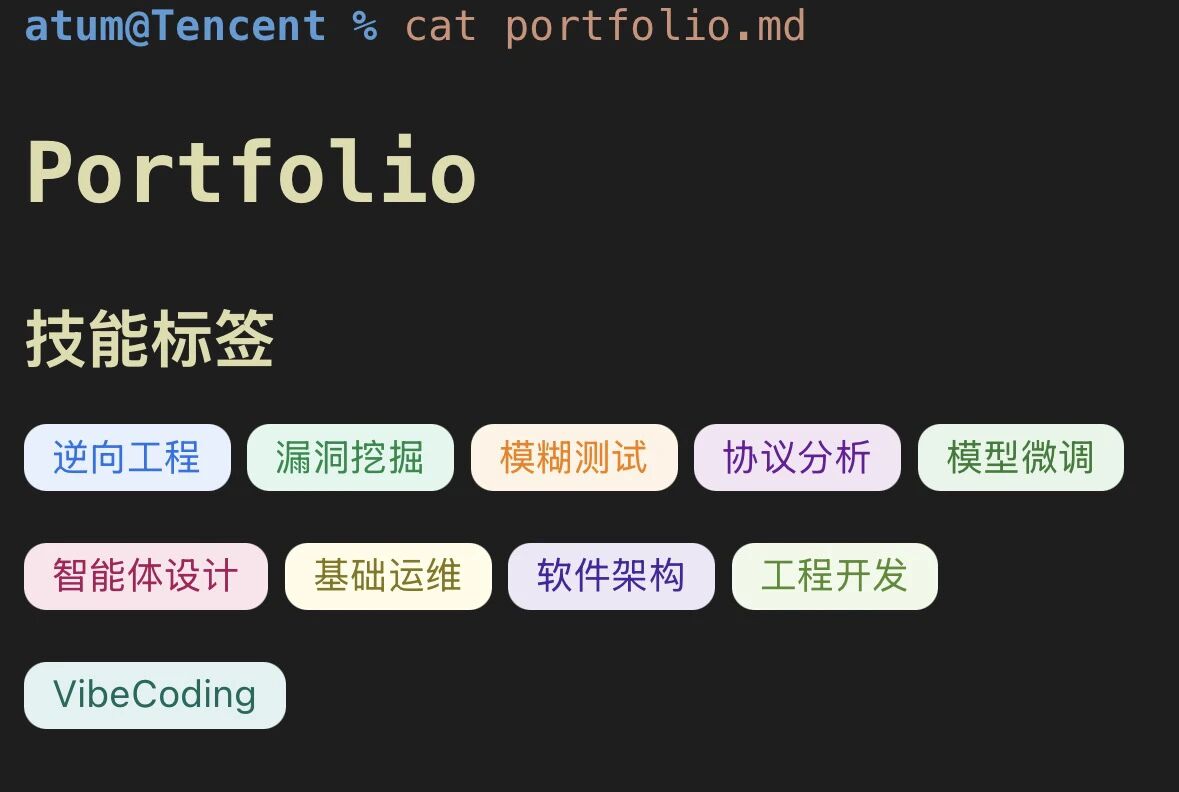
This pursuit of being "not a vessel" has naturally extended into my professional development. I have never wanted to define myself solely by labels such as "vulnerability researcher," "reverse engineer," or even "security researcher." I want both to deepen my expertise in specific areas and to keep crossing the boundaries between specialties and fields. I have always believed that, despite the great variety of technical disciplines, their underlying principles are often interconnected. An idea from one field may become the key to understanding another; a method developed in one direction may transfer to an entirely different problem.
II. Making Difficult Security Tasks Scalable
My other aspiration concerns my profession.
When I first entered the security industry, I gradually realized that achieving excellence in work such as vulnerability discovery and penetration testing often depends heavily on a small number of top experts. Yet their judgment, intuition, and experience are accumulated through years of practice. They are difficult to document completely, and even harder to reproduce and pass on reliably. When the person leaves, the expertise disperses—and the capacity of any one individual is ultimately limited.
This led me to keep asking:
Can these difficult security tasks become less dependent on a handful of experts and instead be performed at scale through engineering, automation, and eventually intelligence?
I began exploring this question intermittently in 2020.
At first, I approached it through engineering. I wanted to turn expertise hidden within individuals into technical assets that could be recorded, combined, and reused.
For example, I experimented with enabling low-cost "fuzz anything for any vulnerability." The core idea was not merely to reduce the cost of running fuzzing. It was to break down the expertise required to write fuzz harnesses into reusable modules that could be assembled like building blocks to create new harnesses for different targets and scenarios.
I also tried to encode the various features required to identify vulnerabilities as data and to design abstractions capable of expressing different vulnerability classes. The goal was to turn expert knowledge of "what constitutes a vulnerability" and "how to recognize one" into vulnerability patterns that could be described, combined, and passed on. I also experimented with using automation to discover protocol vulnerabilities from protocol specifications.
The paths differed, but the goal remained the same: preserve expert knowledge and make expert capability reusable.
Yet understanding the goal was easier than achieving it. Constrained by the technology and practical conditions of the time, most of these attempts did not meet my expectations. Many ideas stopped at prototypes, and many explorations reached dead ends.
In October 2023, I began leading foundational security work at Xuanwu Lab. That same year, the emergence of large language models showed me another possibility.
Beginning in 2024, I once again devoted substantial effort to this goal. We wanted to build an "AI expert" capable of understanding source code, analyzing context, forming judgments, calling tools, and exploring autonomously—one that could not only reuse existing expertise, but also confront unfamiliar problems and complete tasks that had previously been possible only for a small number of experts.
After exploring this path for years, my team and I finally built an AI agent for source-code vulnerability discovery. It has found more than 200 vulnerabilities to date. In our view, it is gradually approaching a form of general intelligence for source-code vulnerability discovery.
For me, this is not only a milestone for the project. It is also a milestone for a professional ideal I have pursued for many years.
III. Seven Years at Xuanwu
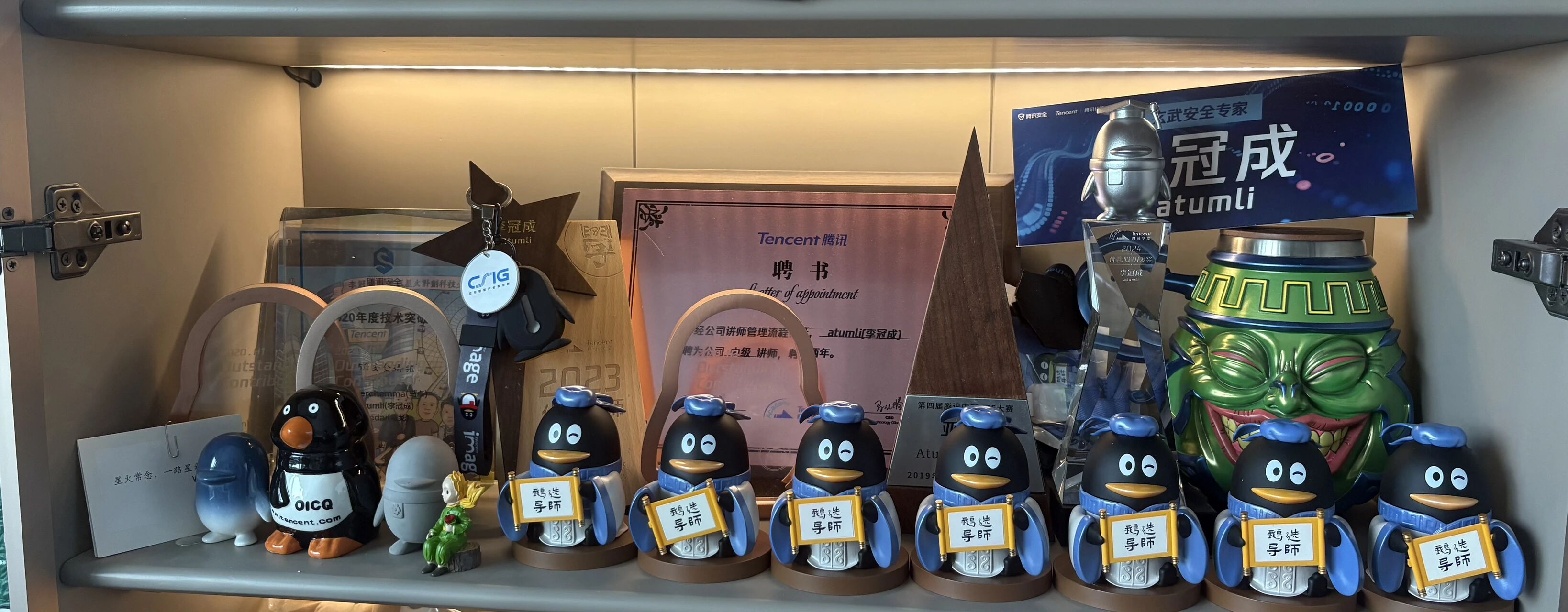
My seven years at Xuanwu Lab aligned remarkably well with these aspirations.
The environment TK created gave me the freedom to explore the possibilities of frontier technologies. At the same time, it encouraged us to think proactively about how technology creates value and, through that process, to learn how to drive initiatives and turn ideas into reality. Here, I did not have to confine myself to becoming any one kind of "vessel," and I had the opportunity to keep pursuing my professional ideal of making difficult security tasks scalable.
Along the way, I learned a great deal from TK and every one of my colleagues. I grew from a new graduate who knew only how to immerse himself in technical research into someone capable of thinking about value and bringing work into practice.
Whenever I reflect on this, I feel profoundly fortunate. I was able to spend the first seven years after graduation at Xuanwu, freely exploring and pursuing my ideals, while having the privilege of working alongside all of you. As I leave, what I most want to express is my heartfelt gratitude.

IV. The Next Journey
Now it is time to begin the next chapter of my life. As I head to MiniMax, my aspirations remain unchanged and my search continues. I hope to contribute everything I can, to work alongside my new company and team toward shared success, and to continue growing through new challenges.
Finally, I want to thank TK and all my colleagues once again for your guidance over the years, and for supporting the growth of both me and my team. To me, Xuanwu Lab has been less a job than another alma mater. I sincerely wish Xuanwu and Tencent ever greater success.